Visa Lines and Layover Lounges: The Quiet Gatekeepers of Global Physics
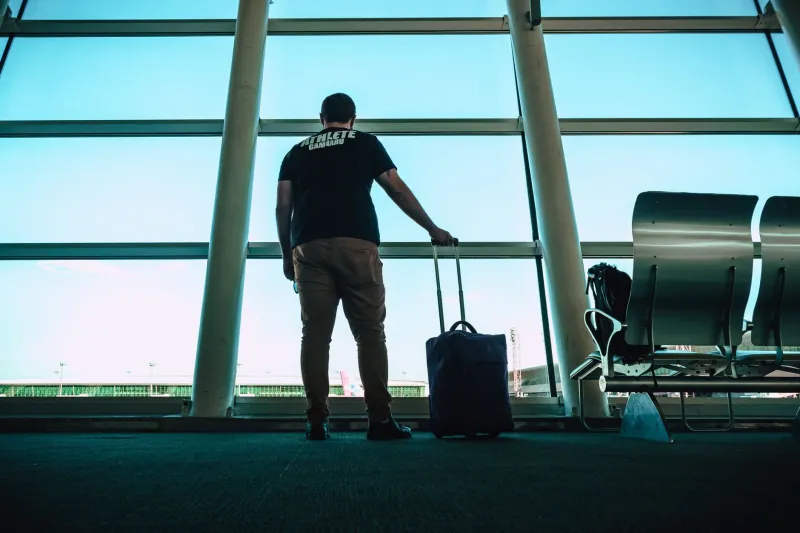
Before a single photon is measured or a single equation is presented at OSAPS 2024 in Cebu, a different kind of physics has already been at work: the physics of distance, cost, and paperwork. A graduate student in Manila can reach the Cebu conference venue with a one-hour domestic flight and a passport that raises no eyebrows at any border. A postdoctoral researcher in Boston faces a fourteen-hour itinerary through two airports, a four-figure airfare, and — depending on their citizenship — a visa application process measured in months. Both scientists may be working on the same problems. Only one of them will find it easy to be in the room.
This asymmetry is rarely discussed in plenary sessions, yet it shapes the composition of every international conference, including our own.
The Arithmetic of Attendance
Consider the practical calculus facing a US-based physicist weighing attendance at OSAPS 2024 Cebu. Round-trip economy fares from the American East Coast to Mactan-Cebu International Airport routinely exceed $1,200, with routings through Seoul, Tokyo, or Doha adding a full day of travel in each direction. There is no direct flight from the United States to Cebu. For a researcher on a soft-money appointment, or a graduate student whose travel budget is a line item on an advisor's grant, the question is not whether the conference is worthwhile but whether it is feasible.
Now invert the scenario. A Filipino doctoral student based in Quezon City can register, travel, and attend for a fraction of that cost and none of the border friction. A scientist from Singapore, Taipei, or Hong Kong reaches Cebu in under four hours. The result is a conference hall whose composition reflects geography and geopolitics as much as it reflects scientific merit — and that composition, in turn, shapes which collaborations form, which problems get discussed, and whose questions get asked.
Passport Privilege Is Research Privilege
The Henley Passport Index consistently places US passports among the world's most powerful, granting visa-free access to well over 180 destinations — the Philippines among them. American scientists, in other words, face minimal formal barriers to attending conferences in the Asia-Pacific. The barriers they face are financial and temporal.
But the reverse flow tells a starker story. A Filipino physicist hoping to present at an American Physical Society meeting must apply for a US visa, pay fees exceeding $200, secure an appointment at an embassy that in some countries involves waits of many months, and accept a nontrivial risk of denial — all before booking a flight to a conference where their research has already been accepted. The US State Department's own data shows visa refusal rates that vary enormously by country of origin. For early-career researchers, a single denied visa can mean a missed opportunity that compounds: the talk not given, the collaborator not met, the postdoc not learned about.
When OSAPS convenes in Cebu, the direction of convenience reverses. The conference becomes, for many US attendees, a rare experience of what most of the world's scientists navigate routinely: distance as a filter.
What the Filter Removes
The concern is not that American physicists will miss out on pleasant weather in the tropics. It is that travel friction functions as a silent selection mechanism on the scientific enterprise itself.
Conferences are where informal information flows fastest: which labs are hiring, which datasets are newly available, which methods are quietly failing. When attendance is skewed toward those who live nearby or hold strong passports, the resulting networks reproduce themselves. US researchers who never attend Asia-Pacific meetings are progressively excluded from citation networks, review pools, and hiring conversations centered on the fastest-growing physics communities in the world. The literature increasingly reflects this — a growing share of high-energy physics, photonics, and condensed matter output now originates in East and Southeast Asia.
Conversely, conferences held in the region give early-career scientists from ASEAN nations visibility they might never obtain in Boston, Geneva, or Chicago. A poster presented in Cebu to a regional audience of engaged peers may do more for a career than a talk given to a half-empty session in a conference city chosen for its flight connections rather than its scientific community.
Practical Guidance for the Long Haul
For US-based attendees weighing the journey to OSAPS 2024, a few practical notes. First, book early: trans-Pacific fares from the US West Coast — Los Angeles, San Francisco, Seattle — are substantially lower than East Coast routings, and a positioning overnight in Manila or Seoul can cut costs considerably. Second, US citizens require no visa for stays under thirty days in the Philippines; the logistics are real but entirely solvable with planning. Third, and most importantly, treat the trip as an investment rather than an expense. The colleagues met in Cebu are precisely those shaping the research agenda of the decade ahead.
For organizers, the lesson is broader. If scientific exchange is meant to be global, conference locations, hybrid presentation options, and travel support policies are not administrative afterthoughts — they are instruments of scientific equity. Every organizing committee chooses who is in the room when it chooses where the room is.
The Conversation Worth Having
The fourteen hours between Boston and Cebu are more than a flight; they are a measurement of how unevenly the opportunity to do physics is distributed. OSAPS 2024 Cebu will not resolve that asymmetry. But by meeting in the Asia-Pacific rather than merely about it, the conference takes a small step toward a scientific conversation whose membership is decided by curiosity and competence — not by layover schedules and visa queues.