Three Hours, Two Hundred Posters: A Working Method for the OSAPS 2024 Poster Hall
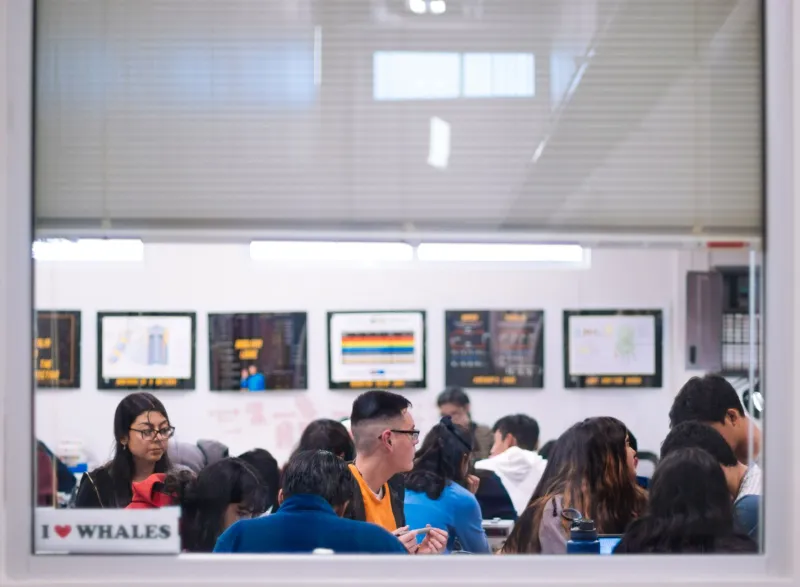
For many US-trained physicists, the poster session is the conference's awkward middle child — less prestigious than the plenary, less comfortable than the hallway conversation. That dismissiveness is a strategic error. At a gathering like OSAPS 2024 Cebu, where the Asia-Pacific research community assembles in one hall, the poster session is arguably the highest-density talent and data environment you will encounter all year. Treating it casually means leaving leads on the table.
The challenge is real: with roughly three hours of scheduled poster time and potentially two hundred presentations spanning optics, condensed matter, plasma physics, and computational methods, no attendee can engage deeply with everything. The solution is not speed-reading. It is disciplined triage combined with a small number of genuinely deep conversations.
Do the Reconnaissance Before You Land in Cebu
Most conference apps and abstract books go live weeks in advance, and most attendees never open them until they are standing in the hall. Resist this. Two evenings with the abstract list — ideally on the long flight over the Pacific — will repay you enormously.
Sort posters into three buckets. The first is your direct specialty: you already know these researchers, their institutions, and their debates, so a single sharp question can establish credibility quickly. The second is the adjacent field — areas where methods from your work might apply or where results might soon apply to you. The third is deliberate serendipity: two or three posters chosen purely because the abstract surprised you. In our experience covering international meetings, the third bucket produces a disproportionate share of the memorable conversations.
Note presenter names and institutional affiliations. At an Asia-Pacific meeting, the institutional landscape will differ from a typical American Physical Society meeting, and knowing whether a poster comes from a major national laboratory, a rising regional university, or a first-time international presenter should shape how you allocate your minutes.
The Four-Minute Conversation
Once in the hall, the mechanics matter. A workable rhythm looks like this: give each triaged poster a fast visual scan — figures first, then conclusions — and decide within ninety seconds whether to engage. If you move on, a brief nod to the presenter costs nothing and maintains the collegial tone that makes these sessions function.
When you do stop, four minutes of focused conversation beats twenty of polite wandering. The questions that matter are diagnostic ones. Ask what the key systematic uncertainty is, not just what the headline result shows. Ask whether the result has been reproduced in-house under different conditions. Ask what the researcher would do next with unlimited beam time or compute. Presenters discussing genuinely mature work answer these fluidly; presenters stretching preliminary data toward a conference deadline often reveal the seams. Neither outcome is a failure — but only one typically warrants a follow-up investment.
Be alert to a pattern familiar to anyone who has attended meetings across the region: some of the strongest results at Asia-Pacific conferences come from early-career presenters whose English-language abstracts undersell the underlying work. A figure that looks routine in the PDF may represent months of painstaking measurement. Give these posters the benefit of the doubt your own graduate students would want given.
Take Notes You Will Actually Use
Business cards pile up and die in desk drawers. Instead, carry a small notebook or a single running note file, and after each substantive conversation, spend thirty seconds writing three things: the presenter's name and institution, the one result you found most interesting, and the specific next step you proposed. "Send you our manuscript on the phase-transition measurements" is a next step. "Nice to meet you" is not.
Photography policies vary by conference, so ask before photographing any poster — the request itself often opens a better conversation than the photo does.
Convert the Hall Into a Pipeline
The poster session's real value is realized in the seventy-two hours after it ends. Same-evening follow-up emails, sent while the conversation is fresh, get dramatically higher response rates than those sent a week later from a US office. Reference the specific result you discussed; generic outreach signals you were collecting contacts rather than pursuing science.
For US attendees, the arithmetic is compelling. International co-authorship rates on American physics papers continue to climb, and the Asia-Pacific region represents the fastest-growing share of global physics output. A single poster-hall conversation at OSAPS 2024 — with a graduate student who will run the lab in five years, or a mid-career researcher whose dataset complements yours — can seed a collaboration that a cold email never would.
Three hours is enough. It is enough if you arrive with a triaged list, ask diagnostic questions, take structured notes, and follow up before jet lag sets in. The next big thing rarely announces itself from the plenary stage. More often, it is standing quietly beside a poster board, waiting for someone to ask the right question.