One Day, Maximum Return: A Field Manual for US Physicists Navigating OSAPS 2024
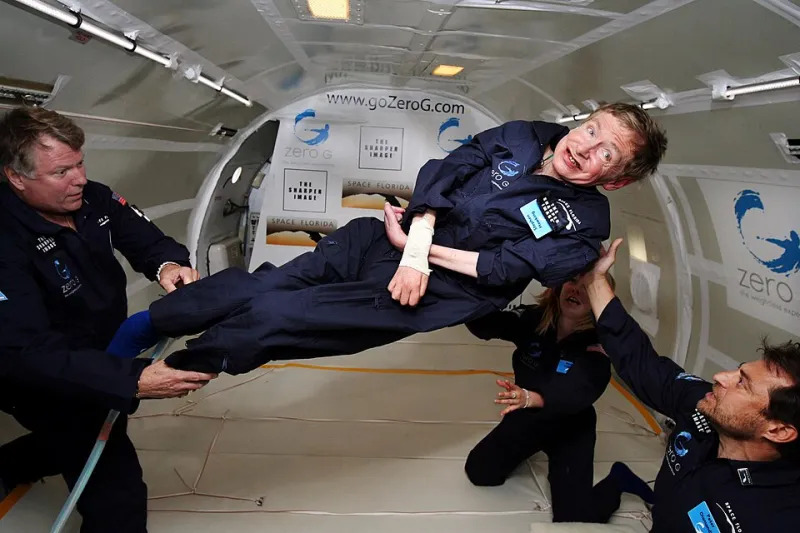
Photo: Jim Campbell/Aero-News Network, CC BY 3.0, via Wikimedia Commons
The Scarcity Constraint Is an Asset
Counterintuitively, the physicist who has only one full day at OSAPS 2024 may extract more value from the experience than the colleague who attends all four days without a deliberate strategy. Scarcity forces prioritization, and prioritization—when done well—produces clarity about what you are actually there to accomplish.
Before you arrive in Cebu, write down three specific things you want to leave with. Not vague outcomes like "expand my network" or "learn about new research." Specific, testable outcomes: a contact working on a problem adjacent to your current grant, a methodological approach you have not encountered in domestic conferences, or a potential co-author for a proposal you are planning to submit in the next eighteen months. Those three outcomes become your navigation system for the day.
The Pre-Conference Reconnaissance Protocol
The OSAPS 2024 abstract book is not a program guide. It is a prospecting document.
Download it at least two weeks before the conference and read it with a specific filter: flag every abstract that addresses a problem you recognize from a different angle than you would approach it. Pay particular attention to abstracts from institutions you have never heard of. Unfamiliar institutional affiliations are a reliable proxy for methodological diversity—researchers working outside the major international laboratory networks have often developed independent approaches to shared problems precisely because they did not have access to the standard toolkit.
Create a short list of eight to ten presentations you consider high priority. Then identify two or three sessions you would not normally attend based on your primary research area. Those peripheral sessions are where the highest-variance discoveries tend to surface—the ones that seem slightly off-topic until, three years later, they define a new NSF funding category.
Morning Architecture: Where the Serious Work Happens
At most international physics conferences, the highest-density intellectual activity occurs in the first two morning sessions, before the social fatigue of a multi-day event begins to accumulate. At OSAPS 2024, treat the morning blocks as protected time for content, not for networking.
Identify the session most likely to contain work that intersects with active US Department of Energy or National Science Foundation priority areas—currently, those include quantum information science, energy materials, climate-relevant atmospheric physics, and next-generation detector instrumentation. Attend that session in full, including the Q&A. The questions researchers ask of each other are often more revealing than the presentations themselves; they expose the live fault lines in a field and signal where the next productive arguments will be fought.
One practical example from the recent history of international symposia: at a regional Asia-Pacific optics conference in 2019, a session on low-cost photonic fabrication techniques drew modest attendance from US-based researchers, who largely categorized it as applied rather than fundamental work. Within two years, fabrication-cost constraints had become a central concern in quantum photonics, and several of the researchers who had presented at that session were named in DOE-funded collaborative proposals. The physicists who had stayed in the room for that session had a two-year head start on recognizing the relevance.
The Poster Session as a Futures Market
If keynote addresses represent the consensus view of a field's present state, poster sessions represent its speculative futures. Treat them accordingly.
At OSAPS 2024, allocate at least ninety minutes to the poster hall—more if your schedule permits. Move through it in two passes. The first pass is rapid and visual: you are scanning for posters that use terminology or diagrammatic conventions you do not immediately recognize. Those are your highest-priority stops on the second pass.
When you stop at a poster, ask the presenter two questions beyond the standard clarifying questions about their methodology. First: "What would you do with this work if resources were not a constraint?" That question reveals the researcher's actual intellectual ambitions, which are often larger and more interesting than what fits on a poster. Second: "Who else at this conference is working on adjacent problems?" Researchers at international symposia almost always know the informal map of their subfield better than any program guide can convey. You are asking them to be your navigator.
Poster presenters at regional Asia-Pacific conferences are also, statistically, more likely to be early-career researchers than the keynote speakers. Early-career researchers are the most valuable long-term network investments a senior US physicist can make at an international event. The person presenting a poster in Cebu in 2024 may be running a lab in Singapore or Seoul—or at a US research university—by 2030.
The Midday Recalibration
Build a genuine break into your schedule between the late morning session and the afternoon program. Not a working lunch—an actual break. Walk outside. The physical environment of Cebu, its proximity to the ocean, its distinct sensory texture, is not a distraction from the conference. It is part of the experience of encountering science from a different geographic and institutional vantage point. Researchers who allow themselves to be present in a place tend to have more generative conversations than those who treat the host city as an inconvenient wrapper around the program.
Afternoon Strategy: The Conversation Investment
If the morning is for content, the afternoon is for people. By the second half of a conference day, the formal program's value diminishes relative to the value of direct, unhurried conversation with researchers you have identified as high-priority.
Locate the two or three people on your pre-conference list whose work most directly intersects with your own. If they are presenting in afternoon sessions, attend and introduce yourself immediately after—not during the break between sessions, when they will be surrounded by other attendees, but at the end of the session, when the room is thinning. Express specific engagement with their work: reference a particular result from their abstract or presentation, not a generic compliment. Specificity signals that you have actually read their work and are worth talking to.
For researchers whose grant timelines are relevant to yours, the most useful question is often the most direct: "Are you currently looking for international collaborators on any active proposals?" The answer, more often than not at an event like OSAPS 2024, is yes.
The Post-Conference Window
The value of a single well-executed conference day depreciates rapidly if you do not act on it within seventy-two hours. Send follow-up emails while the specific details of your conversations are still fresh—and include a concrete next step in each message, whether that is sharing a preprint, scheduling a video call, or flagging a funding opportunity you discussed in person.
The physicists who consistently extract the most career value from international conferences are not the ones who attend the most sessions. They are the ones who treat every interaction as the beginning of something, and who do the unglamorous follow-through work that transforms a Cebu conversation into a co-authored paper.