Grant Dollars and Global Gaps: How NSF and DOE Are Recalibrating Toward Asia-Pacific Physics
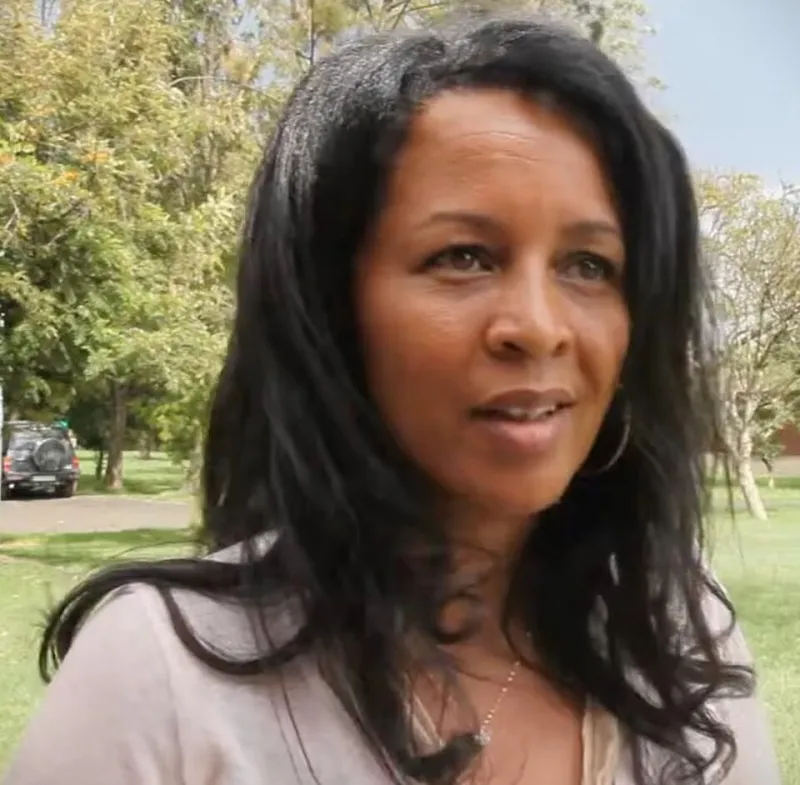
Photo: International Livestock Research Institute (ILRI), CC BY 3.0, via Wikimedia Commons
A Quiet Pivot in Washington's Science Priorities
For decades, the default assumption among American physicists was straightforward: secure domestic funding, publish in top-tier journals, and the international dimension would take care of itself. That assumption is now under serious pressure. Inside the National Science Foundation and the Department of Energy's Office of Science, program officers are increasingly factoring Asia-Pacific research trajectories into how they structure collaborative grants, bilateral agreements, and emerging-technology investment frameworks.
This is not a sudden ideological shift. It is a pragmatic response to data that has been accumulating for years—data that shows Asia-Pacific institutions producing high-impact physics research at a pace that American funding agencies can no longer treat as peripheral.
The Numbers Behind the Pivot
Between 2018 and 2023, physics-related publications from institutions across Japan, South Korea, Australia, Taiwan, and the Philippines grew at a compound rate that outpaced comparable output from Western Europe in several subfields. More telling than raw publication counts, however, is citation density in strategic areas. In quantum information science, photonic materials, and condensed matter physics, research clusters in Singapore, South Korea, and parts of Southeast Asia are generating work that American labs are actively building upon—sometimes without formal acknowledgment of the dependency.
NSF's most recent International Research Experiences for Students (IRES) program data reflects this reorientation. Asia-Pacific placements have risen as a share of total awards, and new Dear Colleague Letters have explicitly named quantum computing and advanced photonics as domains where bilateral engagement with Asia-Pacific partners is encouraged. DOE's Office of Basic Energy Sciences has similarly expanded its joint workshop portfolio with counterpart agencies in Japan and Australia.
For American physicists who are not already embedded in these networks, this trend carries a concrete professional implication: review panels are increasingly composed of internationally connected scientists, and proposals that demonstrate substantive Asia-Pacific collaboration are being viewed more favorably than those that do not.
Where the Competitive Gaps Are Most Pronounced
Three subfields illustrate the competitive dynamic most sharply.
Quantum computing and quantum communication represent perhaps the clearest case. South Korea's national quantum initiative and Japan's Moonshot Research and Development Program have channeled substantial government investment into qubit architecture and quantum networking research. American teams working on complementary problems—error correction, quantum memory, transduction—increasingly find that the most relevant experimental counterparts are operating out of Seoul, Osaka, or Sydney rather than European capitals.
Photonics and integrated optical systems tell a similar story. Taiwan's semiconductor ecosystem has generated a generation of photonics researchers with fabrication access that many U.S. university labs cannot match independently. Collaborative arrangements that give American theorists and experimentalists access to these fabrication environments have already produced joint publications that neither party could have achieved alone.
High-energy and nuclear physics instrumentation rounds out the picture. Detector development work emerging from institutions in Australia and Japan has fed directly into upgrades at facilities like CERN and the Thomas Jefferson National Accelerator Facility. American researchers who built those relationships early are now co-investigators on grants they would not have qualified for otherwise.
What Funding Agencies Are Actually Saying
Conversations with program officers at both NSF and DOE—reported at recent domestic physics meetings—reveal a consistent message: the era of treating international collaboration as an optional enhancement to a proposal is ending. In competitive subfields, reviewers now expect applicants to demonstrate awareness of the global research landscape, and proposals that ignore significant Asia-Pacific contributions to a given problem are increasingly flagged during merit review.
This does not mean that every American physicist needs a co-investigator in Cebu or Canberra. It means that demonstrated engagement with the broader community—through conference participation, joint workshops, or co-authored preliminary work—is becoming a differentiating factor in close funding decisions.
The Opportunity Window at OSAPS 2024
The 2024 Osaka-based Asia Pacific Physics Conference series, with its regional satellite events including this year's gathering in Cebu, represents precisely the kind of venue where these professional relationships are forged. American physicists attending OSAPS 2024 are not simply collecting a conference credit. They are inserting themselves into a network that funding agencies have explicitly identified as strategically important.
For researchers preparing grant submissions in the 2025 cycle, the timing is particularly favorable. NSF's current strategic plan emphasizes global engagement as a core pillar, and DOE's recent budget justifications to Congress have cited Asia-Pacific scientific competition as a rationale for sustained domestic investment—investment that, in practice, often flows most readily to teams with demonstrated international connectivity.
Practical Steps for the Next Funding Cycle
The actionable takeaways are relatively straightforward, even if acting on them requires deliberate effort.
First, audit your current proposal language. If your literature reviews and broader impact sections do not engage with Asia-Pacific research outputs in your subfield, address that gap before the next submission. Review panels notice the omission.
Second, use conference participation strategically. OSAPS 2024 in Cebu is a high-density environment for precisely the kinds of conversations that lead to letters of collaboration, joint workshop proposals, and eventually co-investigator relationships. Arrive with a clear sense of which research groups you want to engage.
Third, track bilateral funding mechanisms. NSF's partnerships with counterpart agencies in Japan (JST), South Korea (NRF), and Australia (ARC) offer dedicated funding channels for joint projects. Many American physicists are unaware these mechanisms exist or underestimate how accessible they are to mid-career researchers.
The cost of being left behind in this recalibration is not abstract. It is measured in proposals that score just below the funding line—proposals that a well-placed international collaboration might have pushed over. The agencies have signaled their direction. The question is whether American researchers are listening.