The Talent Reversal: Why Asia-Pacific Physics Programs Are Winning the Global Recruitment Race
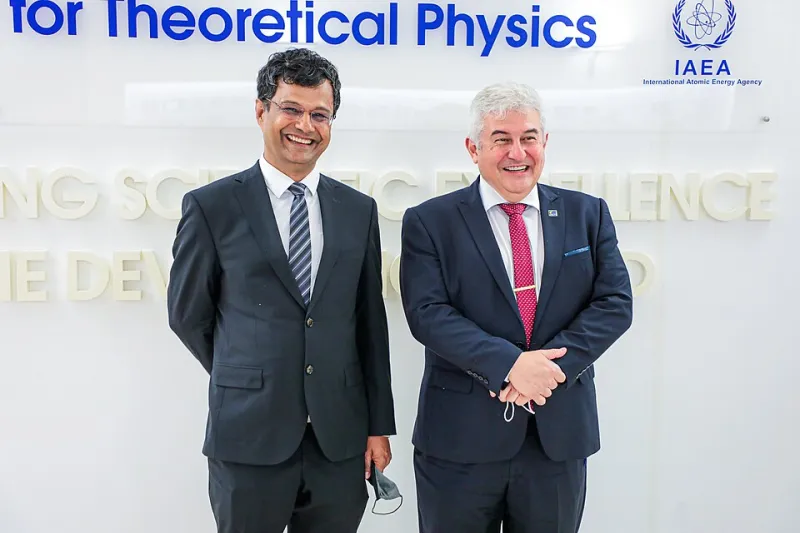
Photo: Ministério da Ciência, Tecnologia e Inovações from Brasília - DF, Brasil, CC BY 2.0, via Wikimedia Commons
A Familiar Narrative, Quietly Unraveling
For much of the late twentieth century, the story told itself almost automatically: a gifted physics student from Manila, Seoul, or Bangalore earns a doctorate at MIT or Caltech, publishes in prestigious journals, and builds a career in the United States. The so-called brain drain was not merely accepted — it was expected. Universities in the Asia-Pacific were treated as pipelines feeding talent into Western research ecosystems, and few questioned whether the flow might one day reverse.
That day, it turns out, has already arrived. The evidence is accumulating quietly but consistently across hiring data, publication records, and — perhaps most tellingly — in the personal decisions of individual researchers who have traded tenured positions in the American academic system for opportunities back in their home regions or elsewhere across the Asia-Pacific.
The OSAPS 2024 conference in Cebu, Philippines, convenes against this precise backdrop, bringing together physicists whose careers span multiple continents and whose professional choices reflect a seismic shift in where world-class research is actually happening.
What the Numbers Are Telling Us
The narrative of inevitable westward migration does not hold up well under scrutiny. Research output from Asia-Pacific institutions has grown at a rate that outpaces much of Europe and North America over the past fifteen years. Countries such as South Korea, Japan, Singapore, and increasingly the Philippines have made sustained, strategic investments in research infrastructure — purpose-built facilities, competitive grant programs, and institutional frameworks designed explicitly to attract researchers who might otherwise have defaulted to positions in the United States or the United Kingdom.
Singapore's research universities, for instance, now routinely offer compensation packages and laboratory resources that are genuinely competitive with top American programs. South Korea's Institute for Basic Science has recruited internationally at a level that would have seemed implausible two decades ago. These are not marginal developments. They represent a deliberate policy architecture designed to make staying — or returning — the rational professional choice.
Voices From the Other Direction
Among the most instructive perspectives at events like OSAPS 2024 are those of physicists who completed their graduate or postdoctoral training in the United States before ultimately choosing positions elsewhere in the Asia-Pacific. Their accounts complicate the brain drain narrative in ways that aggregate data alone cannot.
One condensed matter physicist who spent seven years at a prominent research university in the American Midwest before accepting a faculty position in Taipei describes the decision not as a sacrifice but as a strategic upgrade. The combination of institutional support, proximity to manufacturing partners relevant to her materials science work, and a research culture that she describes as less hierarchically rigid than what she encountered in the US ultimately made the choice straightforward. She remains a regular participant in international conferences, including OSAPS, and maintains active collaborations with former American colleagues.
A plasma physicist who completed his postdoctoral fellowship at a national laboratory in the American Southwest and now holds a senior research appointment in Australia offers a similar account. He notes that the assumption among his American colleagues — that leaving the US represented a step down — revealed more about parochialism than about the actual state of global research infrastructure. His current position, he argues, offers greater autonomy and faster access to funding decisions than the institutional environment he left behind.
What American Institutions Are Getting Wrong
The implications for US research universities and national laboratories are significant and, to a degree, uncomfortable. The traditional recruitment pitch — that America offers the best resources, the most prestigious networks, and the greatest professional opportunities — is no longer automatically persuasive to the most sought-after candidates.
Several structural factors are compounding this challenge. The visa and immigration environment in the United States has introduced friction and uncertainty that prospective international researchers weigh carefully when evaluating long-term career decisions. Cost-of-living pressures in the cities where major research institutions are concentrated have eroded the practical value of compensation packages that look strong on paper. And the chronic underfunding of certain research areas at the federal level has created gaps that well-resourced Asia-Pacific programs are actively filling.
None of this means that American institutions have lost their competitive position irreversibly. What it does mean is that the passive assumption of talent attraction — the idea that prestige alone will continue to draw the world's best physicists westward — is a strategic liability that forward-thinking research leaders can no longer afford.
The Collaboration Imperative
Perhaps the most constructive reframing available to American physicists and institutional leaders is one that OSAPS 2024 itself embodies: the shift from competition to collaboration as the organizing principle of international scientific engagement.
The researchers who move between the United States and the Asia-Pacific are not lost to American science. They are, in many cases, building bridges of exactly the kind that make genuinely global research programs possible. A physicist who trained in the US and now leads a laboratory in Cebu or Kuala Lumpur is not a drain on American research capacity — she is a node in a network that American institutions should be cultivating deliberately.
This reframing requires a degree of institutional humility that does not always come easily to programs accustomed to operating from a position of assumed dominance. But the physicists who are navigating this landscape most successfully — the ones whose careers span multiple countries and whose publication records reflect genuinely international collaboration — consistently describe a professional world in which the old hierarchies are less relevant than the quality of the science and the strength of the relationships.
What the Next Decade Looks Like
Conferences like OSAPS 2024 in Cebu are worth attending not only for the research presented but for what they reveal about the shape of the field's future. The Asia-Pacific is not a peripheral region waiting to catch up with Western science. It is an active, increasingly self-sufficient research ecosystem producing original work across virtually every subfield of physics — from quantum information to astrophysics to applied materials science.
For American physicists and the institutions that employ them, the productive response is not anxiety about competition but genuine engagement with what this ecosystem has to offer. That means rethinking recruitment strategies, redesigning collaboration frameworks, and — perhaps most importantly — listening carefully to the researchers who have already made the crossing and are building careers on both sides of the Pacific.