The Palm Tree Effect: What Happens to Scientific Discourse When a Conference Moves to the Tropics
Physics conferences are usually evaluated by their programs: the keynote lineup, the poster sessions, the proceedings. Rarely does the profession ask a more fundamental question — does the place where scientists gather change the science they produce?
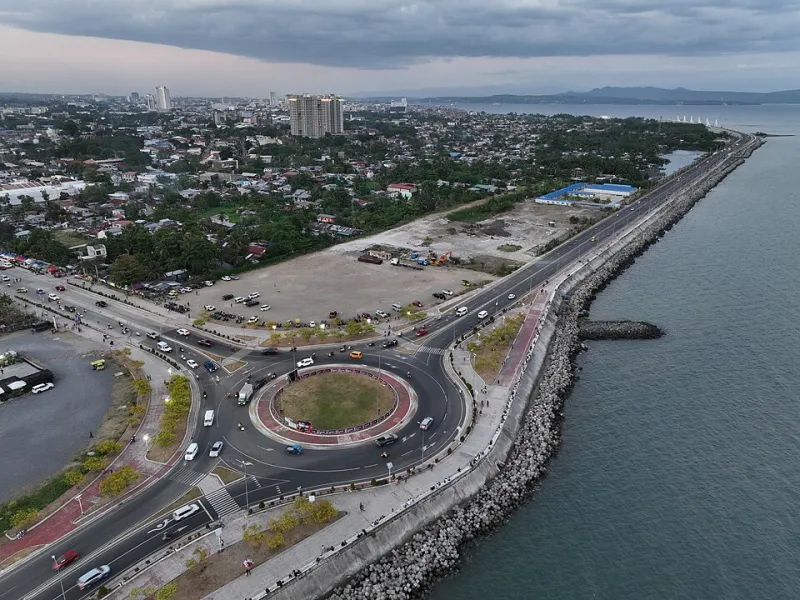
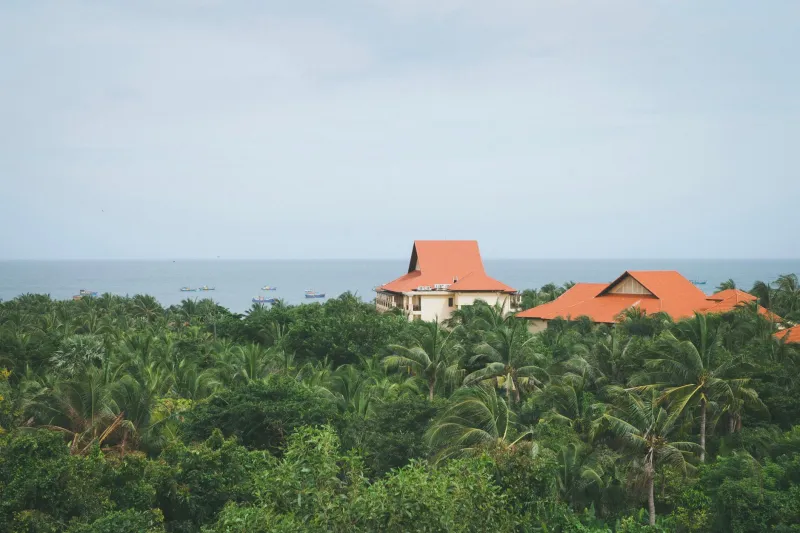
The 2024 OSAPS meeting in Cebu, Philippines, offers an unusually good opportunity to consider that question. A tropical island venue sits at the intersection of two competing narratives about scientific exchange: one in which relaxed, resort-adjacent settings unlock the informal conversations that drive discovery, and another in which paradise venues quietly filter out the researchers who most need to be in the room.
The Unofficial Curriculum of a Conference
Ask any physicist what they actually gained from a major meeting, and the answer is seldom the talks. It is the corridor exchange after a controversial result, the whiteboard session that materializes in a hotel lobby, the thirty-minute conversation with someone whose work you had misread for years.
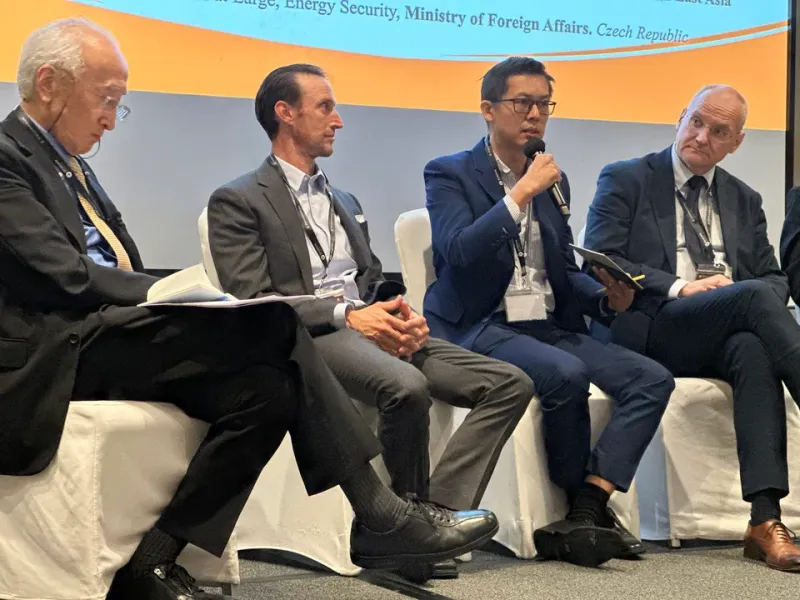
Sociologists of science have long noted that these encounters are structurally fragile. They depend on proximity, unstructured time, and a degree of social ease that conventional conference centers — with their cavernous halls and rigid session scheduling — tend to suppress. Island venues invert the dynamic. When attendees share a single property, eat at the same restaurants, and cannot disperse into a metropolitan evening, the informal curriculum of the conference expands to fill the available hours.
For US-based physicists accustomed to meetings in Chicago, Denver, or Washington, the contrast can be striking. The hallway track at a domestic meeting competes with family obligations, airport departures, and the gravitational pull of the hotel bar closing. In Cebu, the schedule itself becomes more elastic — and with it, the tolerance for ideas that do not fit neatly into a twelve-minute slot.
Who Can Afford Paradise
Yet the same features that make an island venue scientifically generative also raise a distributional question that the American physics community, in particular, tends to under-examine.
A meeting in Cebu is inexpensive to attend from much of Asia. Flights from Manila, Singapore, Hong Kong, or Taipei are short and affordable, and local costs are modest. From the United States, the calculus is different: long-haul airfare, multi-day travel time, and — for early-career researchers on postdoctoral stipends — a real financial barrier. The same venue that democratizes participation within the Asia-Pacific region can, from a US vantage point, look like a privilege reserved for those with well-funded labs or flexible institutions.
This tension is not unique to OSAPS. It shadows every international meeting held outside the traditional hubs of Europe and North America. But it deserves honest framing: for decades, the global conference circuit was anchored in locations convenient to Western attendees, and the resulting asymmetry in who presented, who networked, and who got cited was rarely acknowledged as a structural bias. A meeting in the Philippines partially corrects that imbalance, even as it introduces a new one for American junior faculty and graduate students.
The practical implication for US physicists is straightforward. Departments that fund conference travel should treat Asia-Pacific meetings not as optional extras but as core professional infrastructure — and should prioritize supporting early-career attendance precisely because the barrier is higher. A postdoc who attends OSAPS 2024 is not taking a vacation; she is accessing a regional network that will shape hiring, collaboration, and citation patterns for the next decade.
Does Setting Change the Science?
The stronger claim — that venue choice changes the content of science, not merely its sociology — is harder to establish, but there are plausible mechanisms.
First, attendance composition shapes question-asking. A meeting dominated by Southeast Asian, East Asian, and Oceanic institutions surfaces problems, datasets, and instrumentation priorities that are underrepresented at US-centric meetings: monsoon-region atmospheric physics, seismic networks across the Pacific ring of fire, semiconductor supply chains centered in the region. An American physicist who attends only domestic meetings encounters these fields through literature, filtered and delayed; at a Cebu meeting, they arrive as live research programs with the people running them.
Second, the relaxed tempo of a tropical venue changes risk tolerance. Presenters are more likely to show preliminary results, and audiences are more likely to brainstorm rather than interrogate. Several fields — including quantum optics and condensed matter — have anecdotal histories of collaborations that began in exactly such settings, where the formality of the plenary hall gave way to the candor of the beachside conversation.
A Deliberate Choice, Not an Incidental One
The organizers of OSAPS 2024 did not select Cebu merely for its appeal to travelers. Hosting the meeting in the Philippines centers the Asia-Pacific physics community in its own region rather than as a satellite of European or American calendars. For US attendees, the correct posture is not to treat the location as a perk or an obstacle, but as data: a demonstration of where the discipline's center of activity is heading.
Paradise, it turns out, neither democratizes nor elites scientific networking on its own. It amplifies whatever structures surround it. For those who make the journey — particularly those who arrive with institutional support and leave with new collaborators — the setting does something no convention center can: it slows everyone down long enough for the science to actually get discussed.
That may be the most underrated scientific instrument at OSAPS 2024: the island itself.