Slow Burn: How Physics Talks Given Today Become the Foundational Citations of Tomorrow
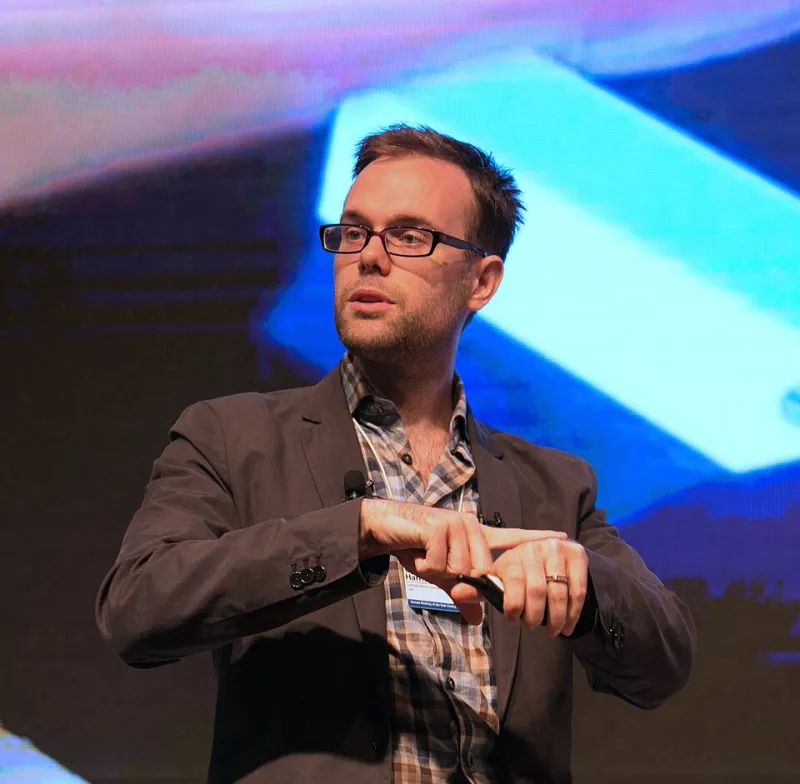
Photo: Robert Xiao, CC BY-SA 4.0, via Wikimedia Commons
There is a persistent misconception in American physics culture that the value of a conference presentation can be measured in the days immediately surrounding it — the quality of the audience questions, the number of business cards exchanged, the buzz in the hallway afterward. By that narrow accounting, a talk delivered in Cebu in November 2024 might seem to carry less immediate weight than one delivered at a flagship domestic meeting in a major U.S. city.
That accounting is wrong. And the citation record increasingly proves it.
The Delayed Impact Curve Is Real — and Steep
Scientometrists who study the lifecycle of research ideas have documented what practitioners often sense but rarely quantify: the influence of a scientific presentation does not peak at delivery. It follows a delayed impact curve, building gradually as the ideas circulate through informal channels, get absorbed into literature reviews, and eventually anchor new lines of inquiry.
A 2019 analysis published in Scientometrics examined citation trajectories for papers that originated as regional conference presentations across multiple physics subdisciplines. The study found that a meaningful share of the highest-cited papers in five-year windows had their first public airing not at major international congresses, but at smaller, regionally focused symposia where the presenter had room to float a half-formed idea before a receptive specialist audience.
The mechanism is not mysterious. Regional conferences like OSAPS attract researchers who are deeply embedded in specific experimental environments — particle accelerators, coastal atmospheric labs, university observatories — that generate data unavailable to scientists working elsewhere. When a presenter introduces a dataset or an anomalous result in that context, the audience that hears it first is often uniquely positioned to recognize its significance. That recognition takes time to propagate outward, but when it does, the original presentation becomes the traceable origin point.
Why Asia-Pacific Venues Amplify the Effect
The Asia-Pacific region occupies a particular position in contemporary physics that magnifies the delayed-impact phenomenon. Several of the world's most consequential physics infrastructure investments of the past two decades — from high-energy facilities in Japan and South Korea to materials science programs across Southeast Asia — are generating experimental results that have not yet been fully integrated into the dominant frameworks that most U.S. researchers work within.
This creates an asymmetry. A physicist presenting at OSAPS 2024 in Cebu is speaking to an audience that may already have hands-on familiarity with phenomena that remain largely theoretical to colleagues back in American university departments. The feedback loop is different. The questions are different. And the probability that a presented idea will encounter exactly the right interlocutor — someone who can immediately connect it to an active experimental program — is higher than it would be at a generalist domestic conference.
For U.S. physicists, this asymmetry is both an opportunity and a corrective. It means that presenting work at OSAPS is not simply a matter of expanding one's geographic reach. It is a way of stress-testing ideas against a knowledge base that is genuinely distinct from the one that shapes peer review at American journals.
Benchmark Datasets and the Long Memory of the Field
Beyond citation trajectories, there is a second mechanism by which conference presentations acquire long-term value: the establishment of benchmark datasets.
In computational and experimental physics alike, early datasets often become reference standards not because they were the most comprehensive, but because they were the first to be publicly described in a citable form. A talk at a symposium — particularly one accompanied by a published abstract or proceedings paper — can serve as the formal introduction of a dataset to the wider community. Five years later, when a new generation of researchers is calibrating models or validating algorithms, they reach for the earliest reliable benchmark they can find. The presenter who introduced that data in Cebu in 2024 may find their symposium abstract cited in papers they never anticipated.
This dynamic is particularly pronounced in fields where Asia-Pacific research groups are generating novel observational data — atmospheric physics, seismology, materials characterization under tropical and high-humidity conditions — that simply cannot be replicated in North American or European laboratory environments. For these datasets, the regional conference is not a waystation on the road to a more prestigious venue. It is the primary point of introduction to the scientific record.
The Systematic Underestimation Problem
Despite this evidence, U.S. physicists continue to undervalue international regional conferences in their professional calculus. The reasons are partly structural: promotion and tenure committees at American universities have historically weighted domestic conference presentations more heavily, and travel funding decisions are often made by administrators who equate prestige with familiarity.
But there is also a cognitive dimension. Researchers naturally evaluate the immediate response to a presentation — the audience size, the apparent seniority of attendees, the quality of post-talk discussion — as a proxy for long-term impact. By those proxies, a smaller regional symposium will almost always compare unfavorably to a large domestic meeting. The problem is that immediate response and long-term citation impact are weakly correlated at best, and in some subdisciplines they are inversely related.
The physicists who have experienced this firsthand tend to describe the realization as a slow accumulation rather than a sudden insight. A paper gets cited in an unexpected context. A researcher from a Southeast Asian institution reaches out because they built on a result first described at a regional talk. A dataset introduced almost as an aside in a twenty-minute presentation becomes, years later, a standard reference in a subfield the presenter had not anticipated entering.
What This Means for Researchers Attending OSAPS 2024
For U.S. physicists preparing to present at OSAPS 2024 in Cebu, the practical implication is straightforward: treat every presentation as an investment with a five-to-ten-year horizon, not a two-day window.
This means being deliberate about documentation — ensuring that datasets, methodologies, and preliminary results are described with enough specificity that future researchers can cite them accurately. It means following up with attendees who engaged substantively, because those individuals may be the conduits through which your work reaches communities you have not yet encountered. And it means resisting the temptation to reserve your most significant findings for a domestic venue, on the assumption that the audience there will be more consequential.
The audience in Cebu may not be larger. But in a field that is increasingly shaped by what happens in the Asia-Pacific, it may well be the more important one.
The presentations delivered at OSAPS 2024 will enter a scientific record that outlasts the conference by decades. The question is not whether they will matter in five years. The question is whether the researchers delivering them will have prepared those presentations with that timeline in mind.