Two Hours of Open Water: Why the Cebu-Bohol Ferry Belongs on Every American Physicist's Conference Budget
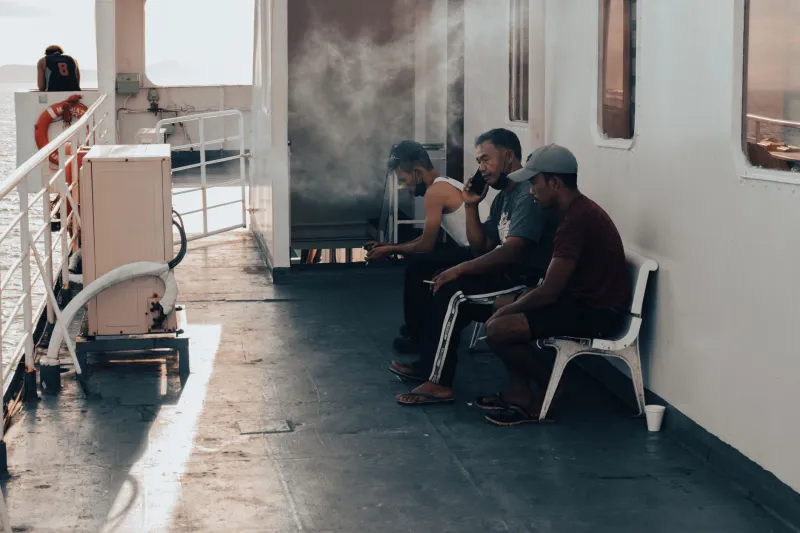
The fast ferry from Cebu City to Tagbilaran takes roughly two hours. It carries tourists, commuters, and—during the week of OSAPS 2024—a scattering of physicists from a dozen countries who have, for the moment, nothing on their schedule. There is no session chair, no timekeeper, no slide deck. There is only the sea, a shared deck, and the unusual condition of two scientists with nowhere else to be.
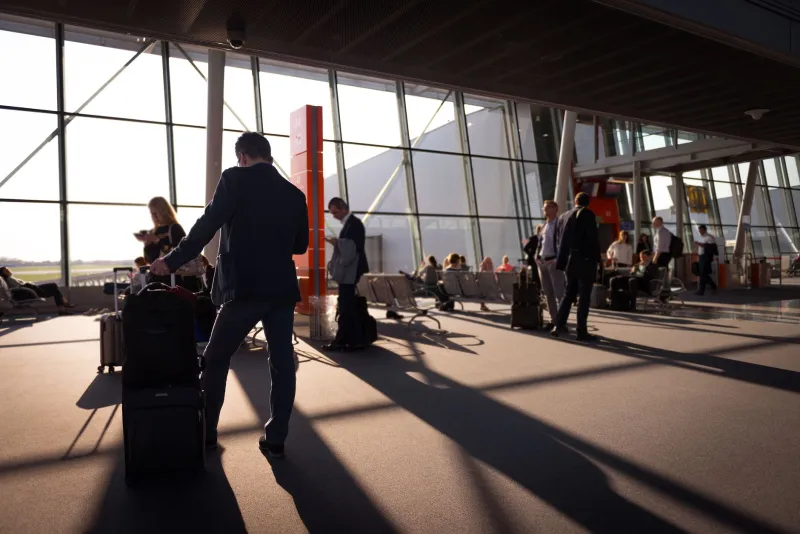
American conference-goers tend to treat excursions as vacation: pleasant, optional, and professionally unproductive. The evidence from decades of international meetings suggests otherwise. Some of the most consequential exchanges at conferences happen not during talks but in the margins—airports, shuttle buses, dinner tables. The ferry to Bohol compresses those margins into a single, concentrated block of unstructured time.## The Auditorium Problem
Formal sessions are, by design, efficient. Fifteen minutes per speaker, five for questions, a moderator holding the line. This format excels at transmitting finished results, and OSAPS 2024's program will deliver plenty of them.
What the format cannot do is surface the unfinished thinking. A junior researcher will not raise a half-formed objection during a Q&A in front of two hundred colleagues. A visiting professor will not sketch out a speculative collaboration in the thirty seconds allotted to questions. The auditorium filters for polish; the ferry deck filters for candor.
There is a physics joke buried in this: the structured session is a closed system, and conversations inside it tend toward equilibrium. The ferry ride is an open system. Energy—of the conversational kind—flows in freely.## What Actually Happens on the Water
Ask around at past Asia-Pacific meetings and a pattern emerges. A condensed-matter postdoc from a US state school ends up seated beside an instrument scientist from Osaka, and by the time Bohol's coastline appears, they have identified a shared measurement problem neither had voiced in a session. Two attendees discover they both applied to the same funding call and agree to pool complementary expertise. A graduate student, emboldened by informality, asks the question she would never ask at a podium microphone.
None of these exchanges requires an agenda. All of them require proximity plus time—two ingredients the standard conference schedule deliberately minimizes.## Field-Ready Science
There is a second lesson in the ferry ride, one about the practice of physics itself. Much of the discipline's history was written in transit: expeditions to observe eclipses, oceanographic cruises, balloon flights, field stations at the edge of the map. Physicists of earlier generations expected to do serious work while moving through the world, instruments stowed and notebooks open.
Modern US academic culture has drifted toward the stationary—the same office, the same beamline, the same annual meeting loop. A day trip to Bohol, with its chocolate hills and its tarsier sanctuaries, is not going to sharpen anyone's spectroscopy. But the habit of traveling with intellectual intent, of treating displacement as an occasion for observation and conversation rather than dead time, is a professional skill worth maintaining. The scientists who do it consistently tend to be the ones whose collaboration networks span continents.## Budgeting for the Unstructured
Here is the practical argument for the US traveler. If your institution funds conference travel, the grant narrative almost always justifies the trip by sessions attended and talks given. Few budgets line-item an excursion. Yet the marginal cost of a ferry ticket and a shared van in the Philippines is modest by American standards—less than a single night in a US conference hotel—and the potential return, a collaboration or a job lead, is asymmetric in your favor.
A reasonable approach: block one full day adjacent to the meeting, invite two or three attendees whose work you found genuinely interesting, and let the itinerary stay loose. The goal is not tourism. The goal is the two hours of open water where nobody is performing professionalism.## The Return Crossing
The ferry back to Cebu typically departs in the afternoon, and by then the dynamic has shifted. People exchange contact information with less ceremony. Follow-up plans form more concretely because the conversation has already had time to mature over a shared lunch.
For US physicists weighing whether OSAPS 2024 is worth the long flight, this is part of the honest calculus. The talks will be archived; the slides will be emailed. The two hours of open water will not. Book the excursion the way you would book the flight—as infrastructure, not indulgence.