Packing for the Tropics: What a Physicist's Luggage Reveals About Career Stage and Collaboration Strategy
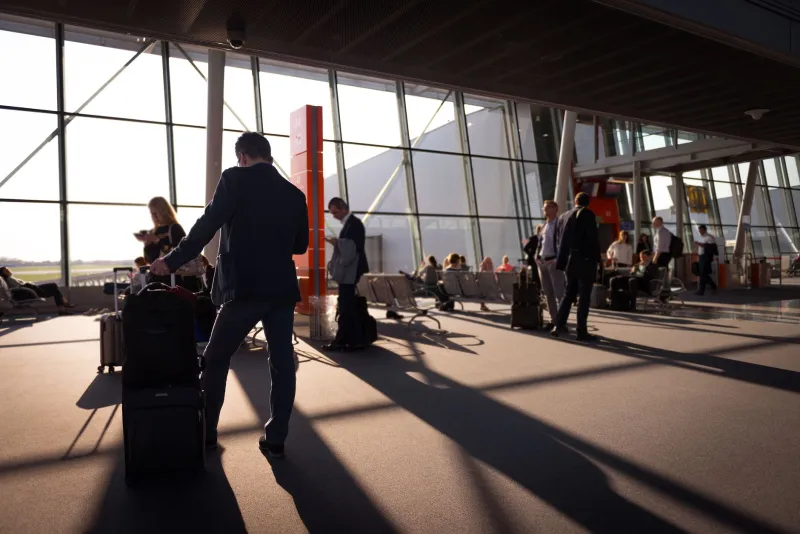
Long before you shake a single hand at the registration desk in Cebu, you have already made a series of first impressions. They happened at the airport check-in counter, at the overhead bin, at the hotel front desk. Conferences are conventionally understood as exchanges of ideas, but they are also exercises in material culture — and few objects are as eloquent as what a physicist chooses to carry across the Pacific.
The Poster Tube as a Professional Dossier
Every seasoned attendee knows the poster tube. But look closely at the tubes circulating through an OSAPS hall and you can read a career history in their surfaces. The dented cardboard shipping tube, held together with a strip of gaffer's tape, usually belongs to a graduate student presenting for the first time. The rigid aluminum telescoping case signals a mid-career researcher who has presented enough times to stop gambling with checked baggage. And the veteran who arrives with a fabric poster rolled into a carry-on, printed on wrinkle-resistant material, has simply been burned once too often by lost luggage.
None of these choices is wrong. But each communicates something. US attendees flying to Cebu — typically routing through Tokyo, Seoul, or San Francisco — should assume their poster will travel in the cargo hold at least once. Laminated paper posters crease permanently along fold lines when rolled tightly for two weeks in tropical humidity. Fabric and synthetic paper alternatives cost more upfront and repay the investment the first time a airline mishap or a monsoon downpour enters the picture.
A Tropics-Specific Checklist
Cebu in conference season is warm, humid, and enthusiastically air-conditioned indoors. That combination defeats the generic conference packing list. Consider the following, refined from conversations with physicists who have presented throughout Southeast Asia:
- Clothing in layers. Lightweight business attire for the session rooms; a light sweater or blazer for halls chilled to near-refrigerator temperatures.
- Moisture management. Humidity affects more than comfort. Chalk talk and whiteboard markers fail, paper handouts warp, and laptop keyboards can suffer. Bring a microfiber cloth and, if your demo involves optics, expect condensation on anything moving between outdoors and indoors.
- Power and connectivity. The Philippines uses Type A, B, and C outlets at 220V — most US laptops and phone chargers handle this natively, but verify the label. A small power strip multiplies your value at any shared table in the poster hall.
- Analog redundancy. A printed copy of your talk on a USB drive, a cloud backup, and a PDF on your phone. Projector formats abroad are unpredictable; the presenter who recovers gracefully from a technical failure earns more goodwill than the one who never faced one.
- Health basics. Sunscreen, insect repellent for evening excursions, and any prescription medications in original containers with a copy of the prescription.
What Veterans Regret Bringing
Ask around at the welcome reception and the regrets cluster into familiar categories. Too many shoes. Formal wear that never left the suitcase, because the actual dress code of international physics conferences skews casual by the second day. Expensive equipment that spent the trip locked in a hotel safe. And, most commonly, the opposite problem: not bringing small gifts from their home institution. Departmental pens, university-branded stickers, even regional chocolates travel light and do outsized diplomatic work in hallway conversations.
The Return Trip: Etiquette of the Loaded Tube
What you carry home matters as much as what you carry in. Poster tubes returning from Cebu tend to be heavier than they arrived, stuffed with business cards, printed programs, and the posters of collaborators who flew home by a different route. If you agree to transport a colleague's poster, treat it as a professional obligation — confirm the delivery plan in writing before boarding.
The same principle extends to data. Collaborations formed at OSAPS 2024 will often begin with a shared drive or a stack of measurement printouts. US researchers should be mindful that crossing international borders with research data — particularly anything involving export-controlled technologies or human subjects data — carries legal obligations under US regulations. When in doubt, transfer data electronically through institutional channels and travel light.
Souvenirs deserve a brief note as well. Dried mangoes from Cebu are justifiably famous and make excellent gifts for a lab group back home. Just remember that agricultural products face US Customs restrictions; commercially packaged and sealed items generally clear without issue, but declare anything uncertain. A courteous declaration costs a minute. An undeclared mango does not.
Gear as Strategy
The deeper point is that packing is a form of planning. The physicist who brings a spare HDMI adapter is the one who ends up rescuing a session. The one who carries departmental reprints is the one whose name circulates after the conference ends. The one with a foldable tote bag is the one who gracefully manages two posters, a laptop bag, and a plate of lechon at the closing banquet.
None of this appears on any abstract submission form. All of it shapes how the week in Cebu unfolds. Pack as though the conference has already started — because in a real sense, it starts the moment your poster tube leaves your hands at the check-in counter.