Disconnected by Design: What Weak Wi-Fi at OSAPS 2024 Might Actually Give American Physicists

Every conference veteran knows the ritual. You arrive at the venue, connect to the guest network, watch the loading spinner rotate with glacial patience, and then complain — to colleagues, to the registration desk, on social media the moment a signal returns. Connectivity failures are treated as organizational malpractice.
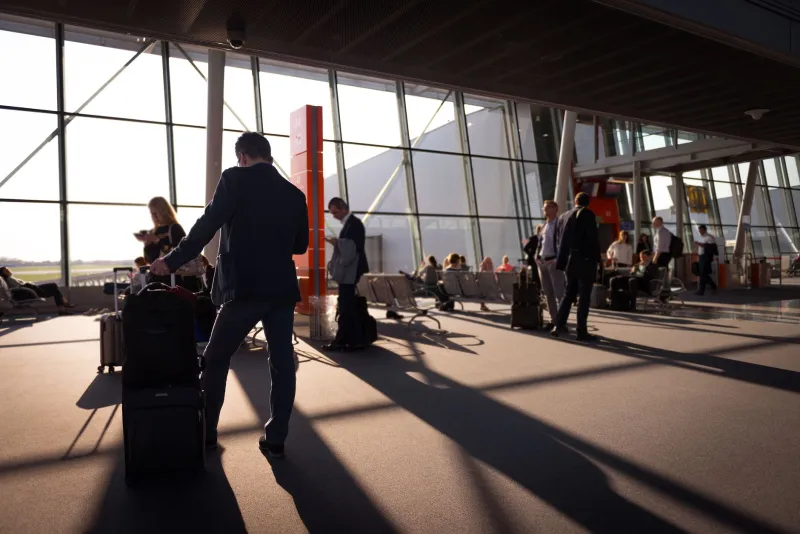
But consider what actually happens in a hall where the Wi-Fi buckles under the weight of a thousand devices. People look up. Strangers make eye contact. Conversations that would otherwise be interrupted by a vibrating phone continue uninterrupted for twenty, thirty, sometimes forty minutes. For attendees flying in from Boston, Chicago, or Seattle, this may be the rarest commodity at OSAPS 2024: sustained, undivided attention.
The Historical Case for Discomfort
Some of physics' most consequential exchanges happened under conditions no modern conference planner would tolerate. The great Solvay meetings ran without any digital distraction because none existed. Postwar colloquia at Bell Labs and in Soviet institutes thrived on blackboards, chalk, and long tea breaks — environments where a half-formed idea could be interrogated for an hour without either party reaching for a screen.
There is a reason the phrase "the conversation in the hallway" carries such weight in scientific memory. Hallway conversations persist not despite conference limitations but often because of them. A dropped connection in a Cebu session hall doesn't end scientific exchange; it redirects it from the inbox to the person standing next to you.
The Realistic Problem
None of this means US attendees should celebrate poor infrastructure. If you're presenting at 9:40 a.m. and need to pull a revised figure from cloud storage, a dead network is a genuine professional hazard. The goal is not to romanticize dysfunction but to build redundancy — to make yourself deliberately independent of connectivity so that its absence costs you nothing.
A Practical Protocol for Going Offline
Treat your devices the way you'd treat any experimental apparatus: plan for failure modes in advance.
Download everything before you board. Talk slides, poster PDFs, the delegate list, the session schedule, and any papers you intend to reference. Assume the venue network will not exist. Anything you need should live locally on your laptop and phone.
Carry your presentation on three media. A laptop, a USB drive, and an emailed copy to yourself plus the session chair. US-based AV habits don't always transfer internationally, and redundancy is cheaper than a missed talk.
Use paper as your buffer. A small notebook serves the function a notes app claims to serve. It never loses signal, never prompts you toward email, and signals to the person you're speaking with that they have your full attention — a gesture that matters in relationship-driven academic cultures.
Schedule your connectivity windows. Rather than fighting for bandwidth all day, designate one block — perhaps an hour in the morning at your hotel — to clear email, upload anything urgent, and check in with your department. Batch-processed connectivity is more efficient than continuous partial access anyway.
Establish a meeting convention. Agree with collaborators on a physical landmark — the registration desk at 3 p.m., the coffee station after the plenary. The old-fashioned arrangement of "meet me at the poster boards" is immune to network outages and, conveniently, tends to produce additional encounters along the way.
What You Stand to Gain
Attendees who stop fighting the network often report the same unexpected outcome: longer, stranger, more generative conversations. The colleague you'd normally exchange a business card with in ninety seconds becomes a forty-minute discussion about a shared methodological problem. The junior researcher from a regional university whose paper you'd never have found through a keyword search becomes a potential collaborator on your next NSF proposal.
For early-career US physicists in particular, this matters. The tenure pipeline rewards visibility, and visibility is manufactured in exactly these unstructured, device-free encounters. A conference that accidentally enforces presence may be doing your career a favor.
Reframing the Complaint
When the network stutters at OSAPS 2024, the productive question is not "whose fault is this?" but "what has this made available?" A hall full of physicists who are physically present and mentally elsewhere is a waste of a long flight. A hall full of physicists with nothing to look at but each other is where collaborations begin.
Prepare your offline protocol, lower your expectations for bandwidth, and raise your expectations for conversation. The Pacific will still be there when you reconnect.